 FlashFerry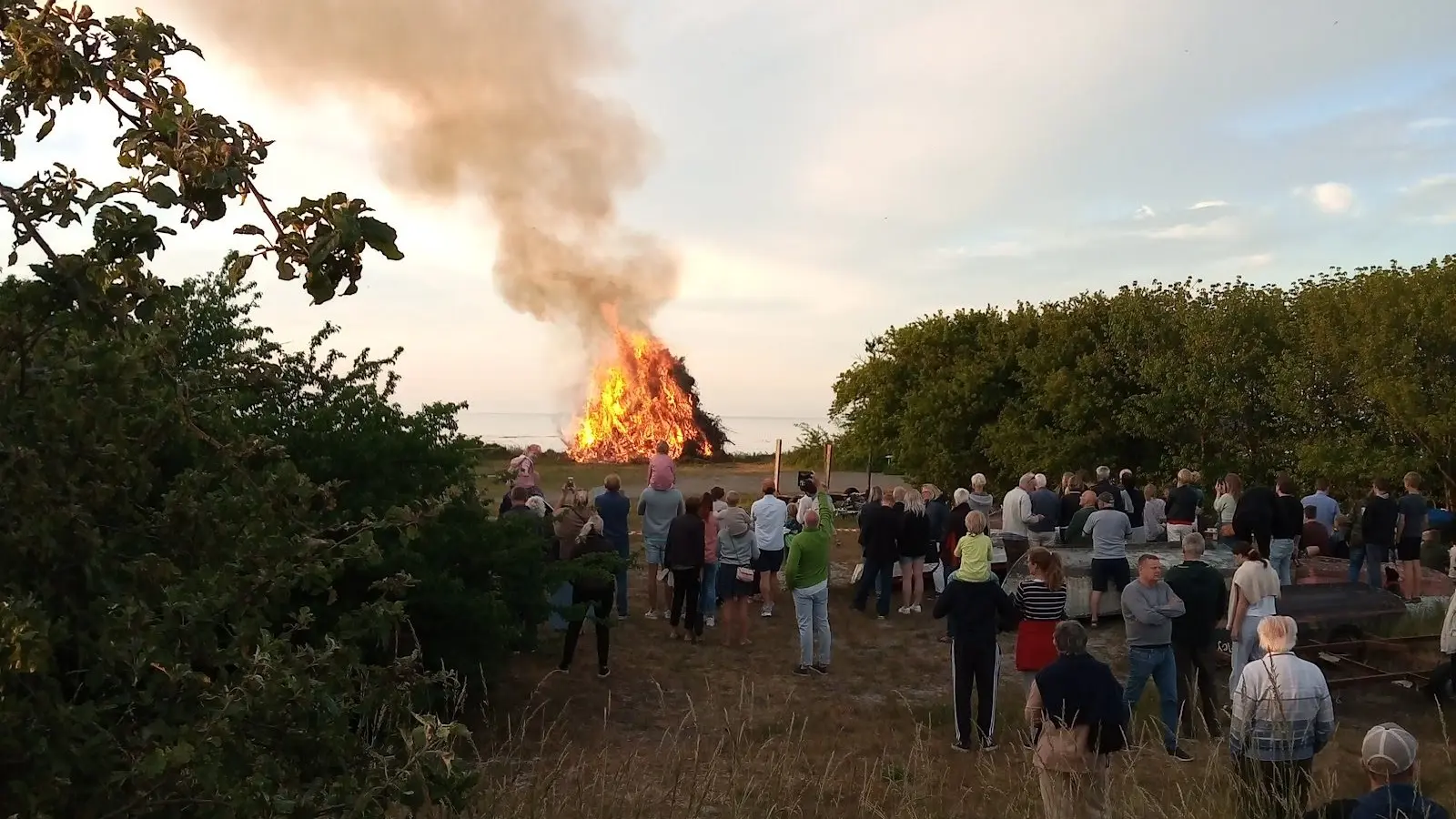
What happens on Sankt Hans
Sankt Hans Aften is the Danish midsummer eve, named after St John the Baptist, whose feast day is 24 June. Denmark celebrates the evening before: families and neighbours gather at a bonfire site, usually by the water. Someone gives the båltale, the bonfire speech, then everyone sings – the classic is the Midsommervise, written by Holger Drachmann in 1885 – and the pile is lit. Many bonfires carry a straw witch on top, a custom that has been part of the evening for well over a century.
Bornholm's advantage is its coastline: sandy beaches in the south, granite cliffs in the north, and bonfires placed where people can look out over the sea. Because the sun sets so late, the evening proper only starts around 9 pm. Arrive earlier and you'll find picnic blankets and the fire still being built.
From Copenhagen
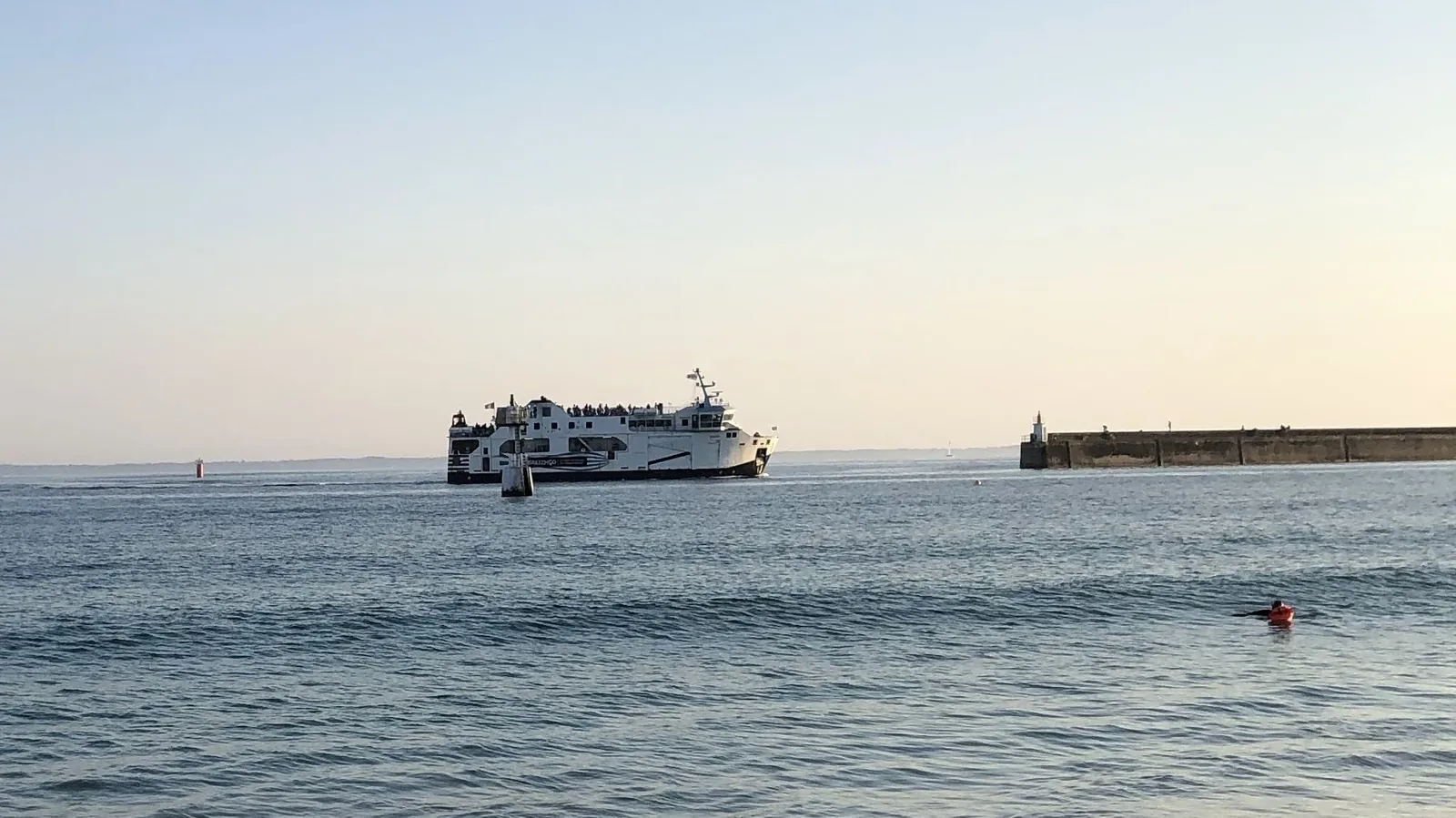
Most international visitors arrive in Copenhagen. From there the quickest way to Bornholm by ferry is the train across the Øresund bridge to Malmö and on to Ystad, whose station sits next to the ferry terminal; the Malmö–Ystad leg takes just under an hour. Bornholmslinjen then sails to Rønne in exactly 80 minutes – in our timetable archive every single departure shows the same figure – on a two-hour rhythm with four to eight sailings a day. Bring your passport or ID card: the route crosses into Sweden and back into Denmark.
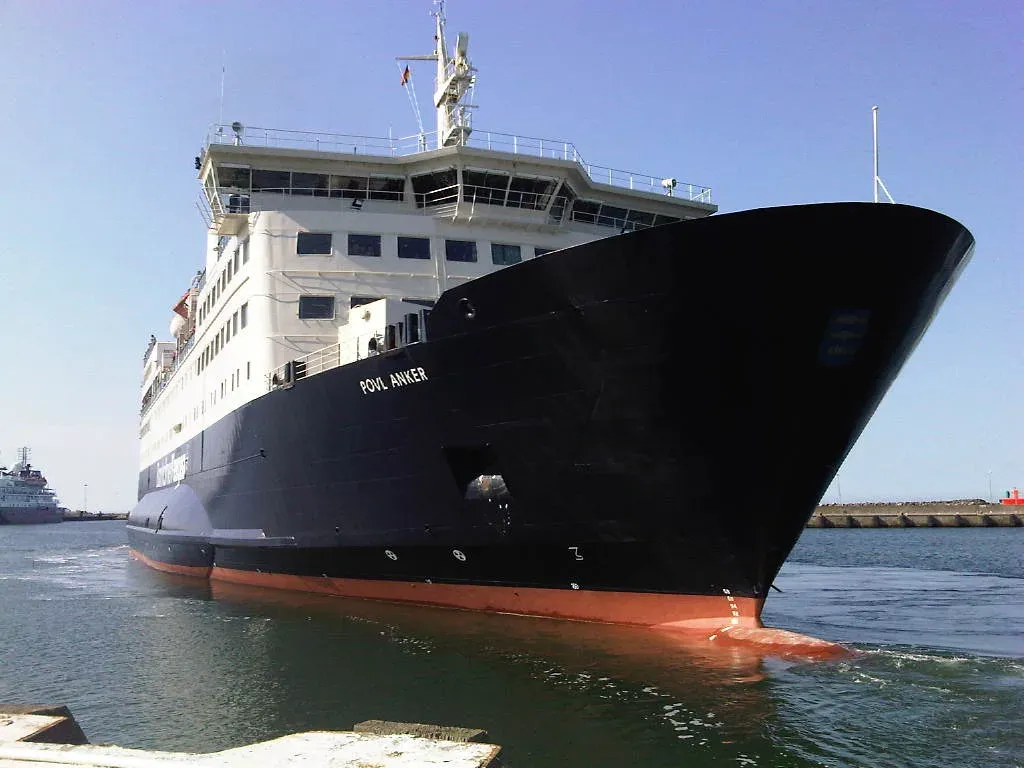
The alternative is the overnight ferry from Køge, a town south of Copenhagen reachable by train. Bornholmslinjen takes 5 hours 30 minutes to Rønne; in summer the boat leaves shortly after midnight and arrives early in the morning, and returns in the late afternoon. Slower, but you sleep on board and wake up on the island.
From Germany
If you come by car through Germany, the direct ferry leaves from Sassnitz-Mukran on the island of Rügen and reaches Rønne in 3 hours 20 minutes, usually once a day, sometimes twice. Sassnitz is an unstaffed port with self-service check-in and tight cut-off times – read the route page before you set off.
Booking: when and what to watch
- According to Bornholmslinjen's season table, 23 June falls in high season, and Danish school holidays begin at the end of June. Vehicle space is tightest on the Sassnitz line.
- Our archived fares are from late summer and say nothing about June. We don't quote numbers we can't back up.
- Accommodation on Bornholm is in heavy demand around Sankt Hans – secure a bed before the ferry.
- After a late night at the fire, an afternoon return on 24 June is more relaxed than an early one.
Where the fires are
Almost every town on Bornholm has its own Sankt Hans bonfire, run by local clubs, harbours or parishes. Times and places are set each year and usually published only in June. The reliable sources are Destination Bornholm's event calendar and the local press in the days before. We deliberately list no locations or times here that we haven't verified for the current year.
Frequently asked questions
Is Sankt Hans the same as Midsummer?
Not quite. Sankt Hans is the Danish bonfire evening on 23 June. Swedish Midsommar falls on a Friday between 19 and 25 June and is celebrated during the day.
What is the fastest ferry to Bornholm?
Ystad–Rønne with Bornholmslinjen: 80 minutes, four to eight departures a day. Ystad is about an hour by train from Malmö.
Do I need to book in advance?
With a car, yes, and early: Sankt Hans is high season and Danish school holidays start at the end of June. Foot passengers have more flexibility, especially on the Ystad line.
When are the bonfires lit?
Late on the evening of 23 June. The exact time varies by town and is announced shortly beforehand. Sunset on Bornholm is around 10 pm at that time of year.
Departures and prices from all operators at a glance.
Search ferries