How long does the Calais–Dover ferry take?
The crossing itself takes about 90 minutes. With check-in and border control, allow around three hours in total.
How much does the Calais–Dover ferry cost?
Foot passengers from around €26, a car with two passengers from around €79, motorhomes from around €119 one way. Across 29 days sampled in August and September 2026, the cheapest sailing of the day for two adults with a car ranged from €42 to €156, with a median of €76. The timetable above shows the live fare for each sailing.
Which operators sail Calais–Dover?
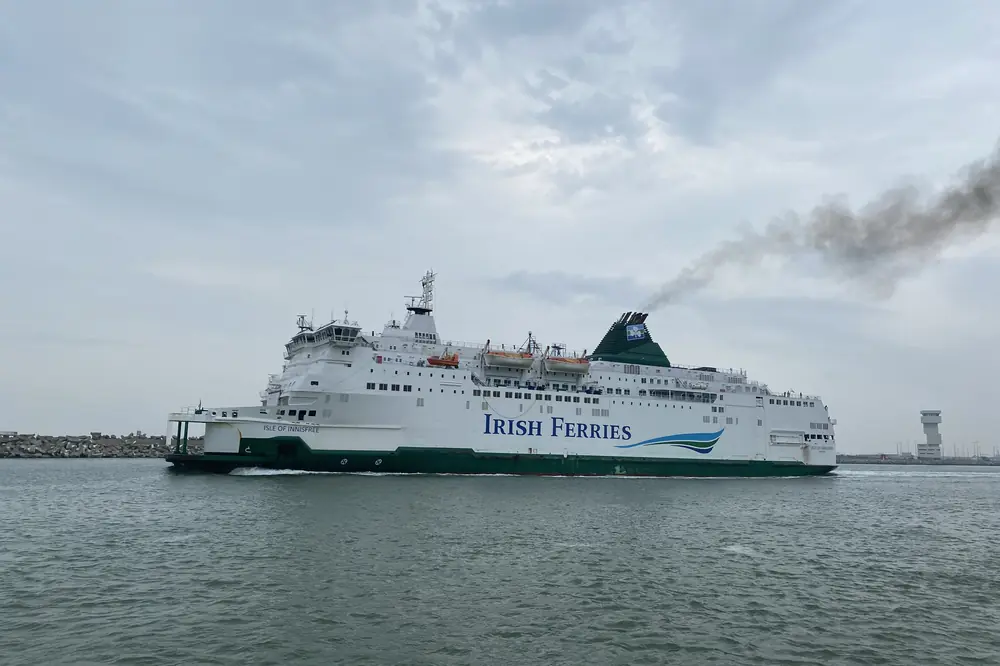
P&O Ferries, DFDS Seaways and Irish Ferries run the route in parallel – together around 34 sailings a day in each direction, up to 46 at peak times.
Do I need a passport?
Yes, unless you are a British or Irish citizen travelling on other accepted documents. A valid passport is required to enter the United Kingdom; national ID cards are no longer accepted from EU citizens. The check happens in Calais, before boarding.
Do I need an ETA for the ferry to Dover?
Almost certainly, yes. Anyone who is not a British or Irish citizen and does not hold a visa or UK immigration status needs an Electronic Travel Authorisation – that includes EU citizens as well as travellers from the US, Canada, Australia and Japan. Since 25 February 2026 it has been enforced strictly: without an ETA the operator will refuse to carry you. It costs £20 per person, is valid for two years and is applied for online or through the UK ETA app.
Can I take my dog?
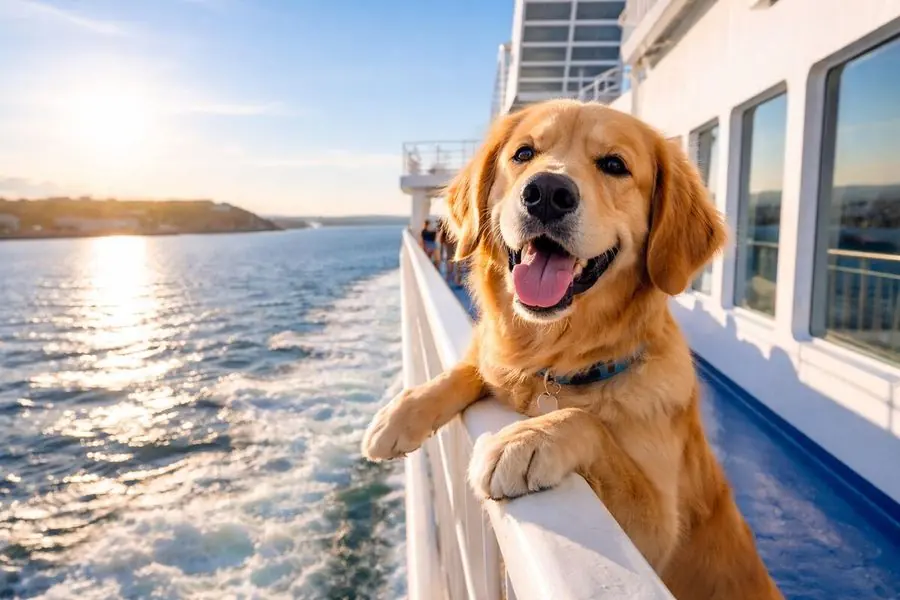
Yes, but there are no pet cabins: dogs stay in the vehicle or in the on-board kennels. To enter Great Britain a dog needs a microchip, a valid rabies vaccination and a tapeworm treatment given by a vet between 24 hours and 5 days before arrival. Coming from the EU you also need an Animal Health Certificate from a vet – allow around four weeks.
Ferry or Eurotunnel – which is better?
The tunnel is faster at 35 minutes, but for two adults with a car it usually costs €160–250 against roughly €79 for the ferry. Vehicle height often decides it: Le Shuttle takes a maximum of 2.55 m, while the ferry has no height limit. If you want a proper break with a restaurant and an open deck, the ferry wins.
Can I travel as a foot passenger without a car?
Yes, but only with P&O Ferries. DFDS and Irish Ferries do not carry foot passengers on this route. A shuttle runs from Calais-Ville station to the ferry terminal.
How do I cross with a motorhome?
On the ferry there is no height restriction – you are charged by the length and height of the vehicle. Measure carefully before booking, roof fittings included; corrections at the terminal cost considerably more. Gas bottles must be closed during the crossing.
What is the cheapest way to book?
Book three to four weeks ahead, travel Tuesday to Thursday and pick a departure before 6am or after 8pm. Combined, those three choices regularly beat a short-notice weekend booking by a wide margin.
When do I need to be at the terminal?
With a vehicle 60 to 90 minutes before departure, 90 to 120 minutes in high season. On foot, 60 minutes is enough. On holiday weekends, earlier still is safer.
 FlashFerry