 FlashFerry
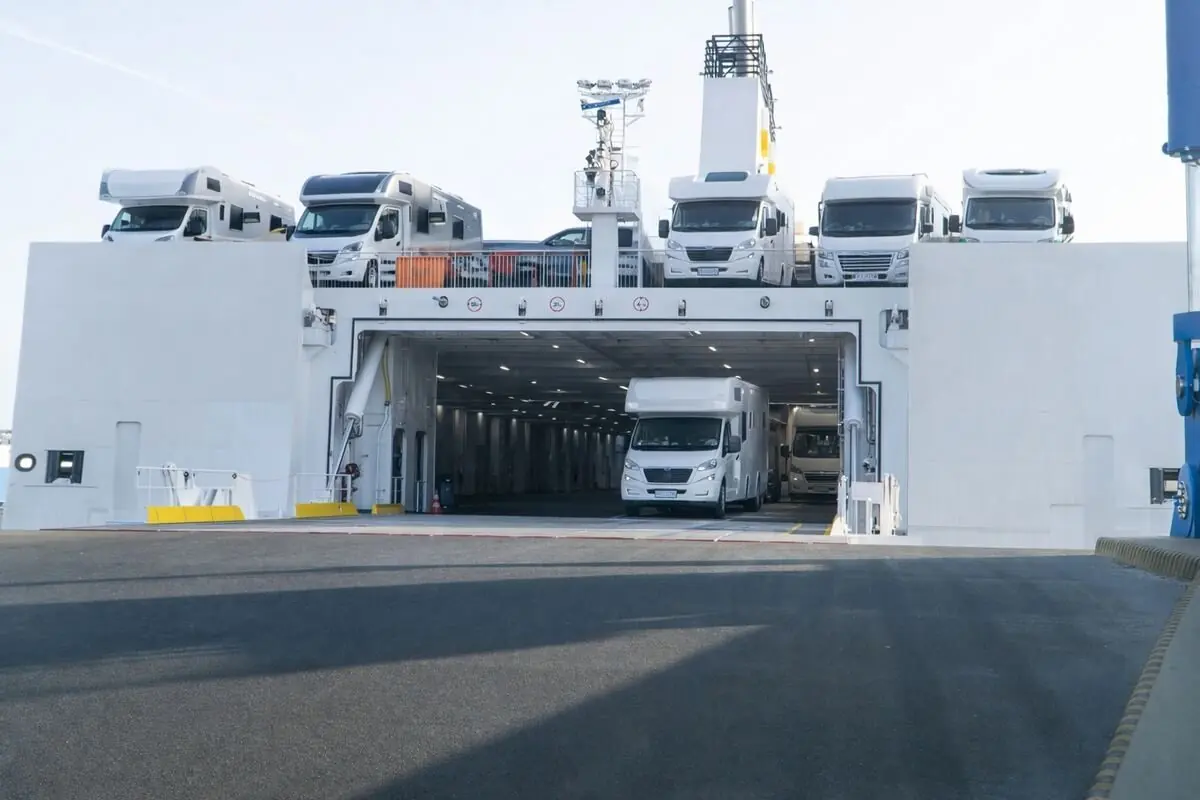
Measurements decide, not the registration document
Operators price by length, usually in bands, and add a surcharge above a certain height. What counts is the real overall measurement, not the figure on the registration document: bike racks, rear boxes, tow bars, awnings and roof fittings all add up. A van listed at 6.90 metres on paper can easily move up a band once a rack is mounted at the back.
With a caravan or trailer you book the combined length, towing vehicle plus trailer. Unhitching rarely helps, because the trailer is then treated as a separate unit and the operator wants to load the combination coupled anyway. Measure both once, calmly, on the driveway, write the numbers down, and book with a small margin rather than to the centimetre.
Gas on board: closed, not running
Gas bottles may travel with you, but they have to be closed during the crossing. That includes the fridge: running it on gas is prohibited on the vehicle deck, because no ignition source is allowed there. If you want to keep the contents cool, switch to mains or battery beforehand and keep the door shut — on short crossings that is easily enough.
How many bottles are allowed, and whether they must be declared, varies between operators. On some routes you are asked at check-in, on others it only appears in the conditions of carriage. Check this for your specific operator before turning up with two full bottles and a spare. Electric vehicles and motorhomes with a traction battery may face separate rules, including a ban on charging on board.
The vehicle deck is closed en route
The point motorhome travellers most often underestimate: you cannot get back into the vehicle during the crossing. The deck is closed once loading is complete and reopened shortly before arrival. Anything you need on the way has to come upstairs with you.
| What to take upstairs | Why |
|---|---|
| Medication | no access until arrival, not even if the crossing is delayed |
| Documents, money, phone | your booking is checked in the passenger areas |
| A jacket and warm layers | open decks are windy, interiors air-conditioned |
| Food for the crossing | onboard prices, and your own fridge is out of reach |
| Everything for the dog | water, bowl, lead, bags |
On most ships animals cannot be left in the motorhome, and on longer routes it is explicitly forbidden. If you travel with a dog, check before booking whether a pet cabin or kennel is available.
Loading and manoeuvring
Large vehicles are usually loaded first and placed on the main deck, the one with the greatest clearance. In practice that means arriving earlier than you would with a car. Turn up at the last minute and your space may have gone to another unit.
On the ramp, the transition is the critical spot. Vehicles with a long rear overhang or low ground clearance ground out there if you take it too fast and at the wrong angle. Slow, centred, and if you are being marshalled, follow the marshal exactly. You rarely have to reverse a combination, but when you do it is in tight lanes with an audience — take your time and use a second pair of eyes.
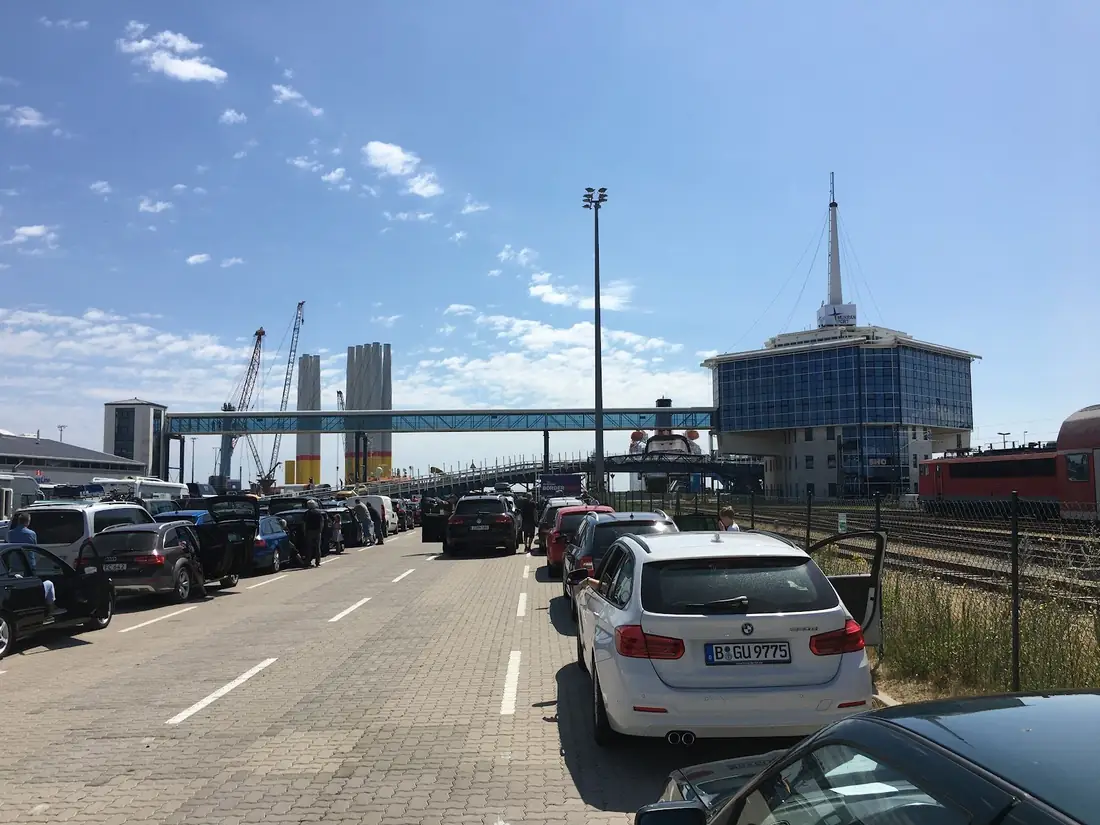
Booking: early, and with the right figures
| Step | What matters |
|---|---|
| Measure the vehicle | overall length and height, with everything attached |
| Declare the measurements | adding them at the terminal costs the day rate |
| Book early | spaces for tall vehicles are limited on each sailing |
| Check the operator's gas rules | bottle limits and declaration duties differ |
| Think about a cabin | sleeping in the motorhome is not permitted on night crossings |
In peak season this matters more for motorhomes than for cars: their capacity sells out first. If you want to head north in summer, book in the winter before. Off season the picture is relaxed, space is available at short notice and the fare is lower anyway.
Frequently asked questions
Can I stay or sleep in the motorhome during the crossing?
No. The vehicle deck is closed after loading and nobody may remain there while the ship is under way. On night crossings you book a cabin or a seat.
How is length measured?
Overall, including bike racks, rear boxes and the tow bar. The measurement taken at the terminal is what counts, not the figure on the registration document.
Do I have to unhitch the caravan?
Normally not. The combined length is booked and loaded as one unit. A trailer loaded separately is usually charged as a vehicle in its own right.
Can the fridge run on gas?
Not during the crossing. Gas systems must be closed. Switch to mains or battery beforehand, or leave the fridge shut and switched off.
How much earlier should I be at the terminal?
Noticeably earlier than with a car. Large vehicles load first and queue in their own lanes; the operator states a time in the confirmation, and with a motorhome it is worth keeping to it.
Can the dog stay in the motorhome?
Usually not, and on longer routes it is forbidden. Since the vehicle deck is closed you could not reach the animal before arrival in any case. Check for a pet cabin before booking.