 FlashFerry
The paperwork depends on which way you're going
This is where general advice misleads people, because the document you need depends on where your dog is resident — not on where you happen to be travelling from. A dog living in the EU carries a pet passport. A dog living anywhere outside the EU, whether that is Britain, the United States, Canada or Australia, needs an animal health certificate issued by an official vet. Both routes also require a microchip and a valid rabies vaccination.
| Where your dog lives | What your dog needs |
|---|---|
| In the EU | EU pet passport. Tapeworm treatment additionally for Ireland, Finland, Malta, Norway and Great Britain. |
| In Great Britain | Animal health certificate from a vet, issued within 10 days of travel. A GB pet passport is not accepted in the EU. |
| Outside Europe (US, Canada, Australia and others) | EU animal health certificate plus proof of rabies vaccination; some countries also need a rabies antibody test well before travel. |
An animal health certificate is single-use: it covers one trip and stays valid for onward travel within the EU for four months, but the next journey needs a fresh one. Book the vet appointment early — practices that issue them get busy in the holidays, and it cannot be done at the port. If your dog comes from a country that is not on the EU's listed-country roster, allow several months: a rabies antibody test with a waiting period may be required before the animal can enter at all.
The tapeworm treatment has its own timing: it must be given by a vet inside a set window before arrival, not earlier and not later, and recorded in the document. Ask your vet to confirm the window for your specific sailing time and book the appointment around the crossing, not around the calendar.
Where the dog stays during the crossing
This varies a lot by route and operator, and it is the thing to settle before booking rather than after. Broadly there are four options.
| Arrangement | When it applies |
|---|---|
| Pet-friendly cabin | Overnight routes; limited in number and often booked out early |
| Onboard kennels | Longer crossings; the dog stays alone, with set visiting times |
| On a lead in the outside areas | The norm on short crossings |
| In the vehicle | Only where the operator explicitly allows it — car decks are usually closed in transit |
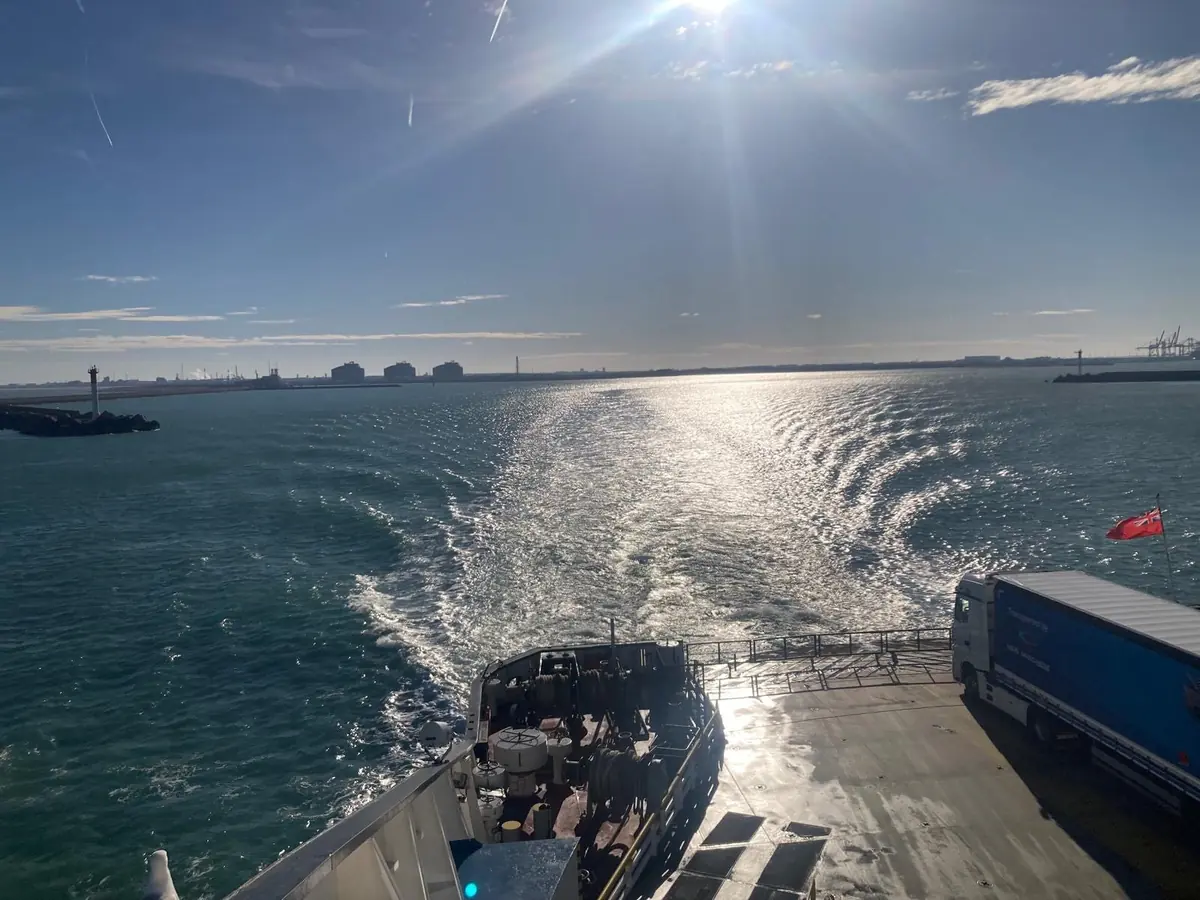
The key point: on most ships the vehicle deck is inaccessible during the crossing. Leave the dog in the car and you cannot reach it again until arrival. On a short hop of under an hour many dogs are fine with that; on an overnight sailing it is not an option, and most operators forbid it there anyway.
Short hops versus overnight sailings
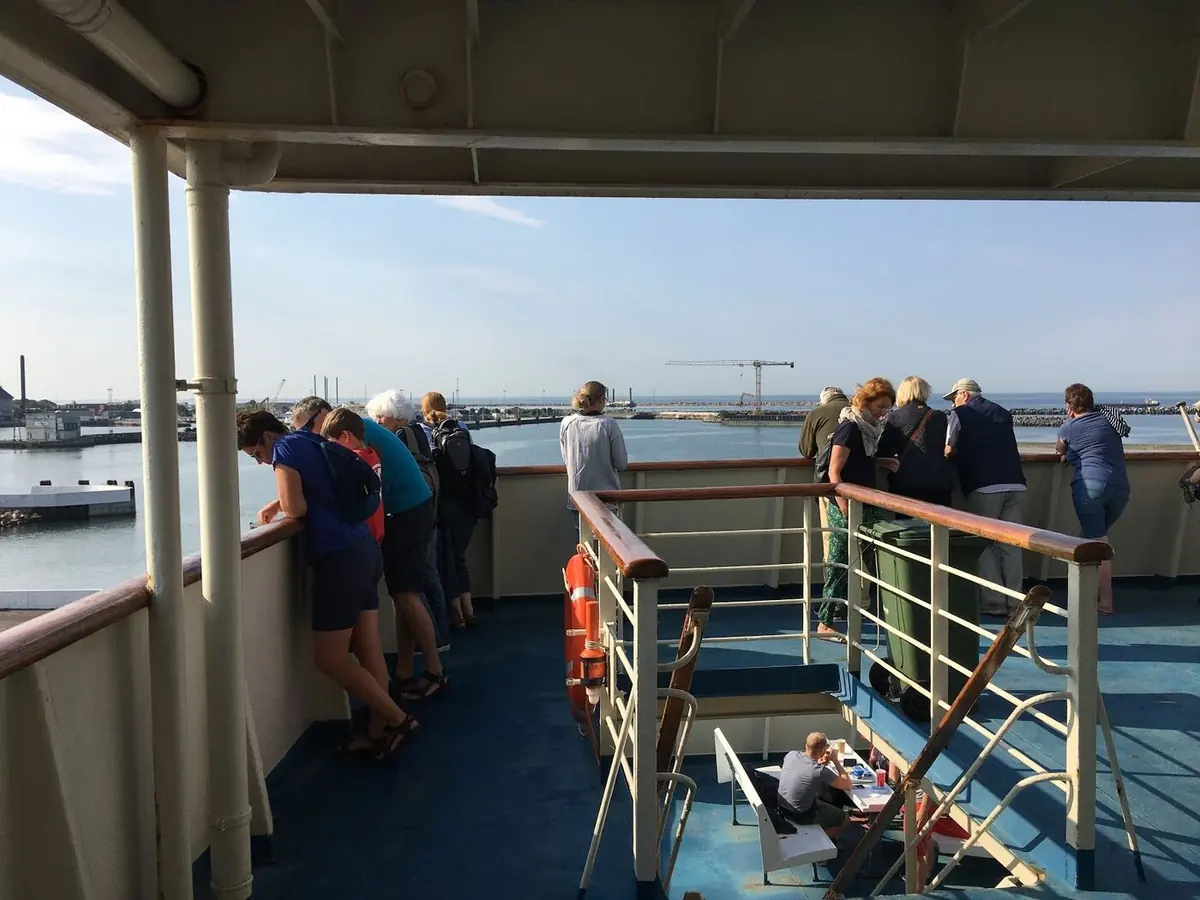
On short crossings such as Dover–Calais or Helsingør–Helsingborg it is straightforward: dog on the lead, out on deck, and after 20 to 90 minutes you're across. Indoor areas such as restaurants are usually off limits; the outside decks are not.
Overnight routes — Hull–Rotterdam, Newcastle–IJmuiden, Travemünde–Trelleborg — turn it into a planning question. Pet-friendly cabins exist in small numbers and go quickly in peak season. Book early and add the dog during the booking process; adding one at the terminal often fails, because the cabin grade has already gone.
Practical things for the crossing
Bring water and a bowl — neither is reliably available on board. A blanket or a familiar towel helps a dog settle in a cabin or kennel. Waste bags belong in your hand luggage, not in the car you can't get back to. And feed lightly: swell affects dogs much as it affects people.
Loading is usually calmer if the dog stays in the car until you have parked — vehicle decks are loud, tight and unpleasant for most dogs. Take it straight to the stairwell afterwards. Muzzles are not generally required, but rules can differ by operator and by breed. That sits in the conditions of carriage and is one of the few points where operators genuinely diverge.
Frequently asked questions
Does the dog cost extra?
Almost always. The fee is charged separately from the ticket and is higher for a pet-friendly cabin than for a dog on deck. Add the dog when booking and the amount is fixed up front.
Can the dog stay in the car during the crossing?
Only where the operator explicitly permits it. On most ships the vehicle deck is closed in transit, so you could not reach the dog until arrival. On long routes it is generally prohibited.
How far in advance does the rabies vaccination need to be?
At least 21 days before entry for a first vaccination. With an unbroken booster history that waiting period does not apply.
Can I use a pet passport issued outside the EU?
No. Pet passports issued in Great Britain and documents from other non-EU countries are not accepted for entry to the EU. You need an animal health certificate from an official vet, issued within 10 days of travel.
Are dogs allowed in the onboard restaurants?
Usually not. Access is normally limited to the outside decks and designated areas. Assistance dogs are exempt and may accompany you indoors.
What about cats and other animals?
Cats and ferrets follow the same basic rules — chip, document, rabies vaccination — and normally travel in a carrier in the cabin. For other species, check with the operator before booking.