 FlashFerry

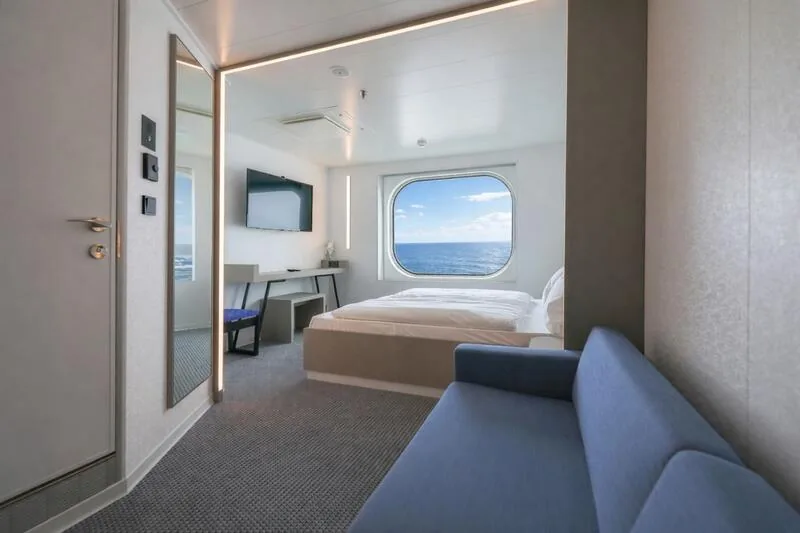
The threshold where a cabin pays
On the Channel the question barely arises. Calais–Dover takes about 90 minutes; there are no cabins to book and none needed. The overnight routes are the ones where it matters: Amsterdam–Newcastle, Hull–Rotterdam, Portsmouth–Santander.
On those, a cabin replaces a hotel night rather than adding a cost. Compare it against a room ashore, not against the seat — that is the calculation most people get wrong.
| Crossing | Recommendation |
|---|---|
| up to 2 hrs | deck or seat, usually nothing else offered |
| 2 to 6 hrs by day | seat or reclining lounge |
| 6 hrs and up, overnight | cabin, booked early |
| over 20 hrs | consider an outside cabin, you are aboard a long time |
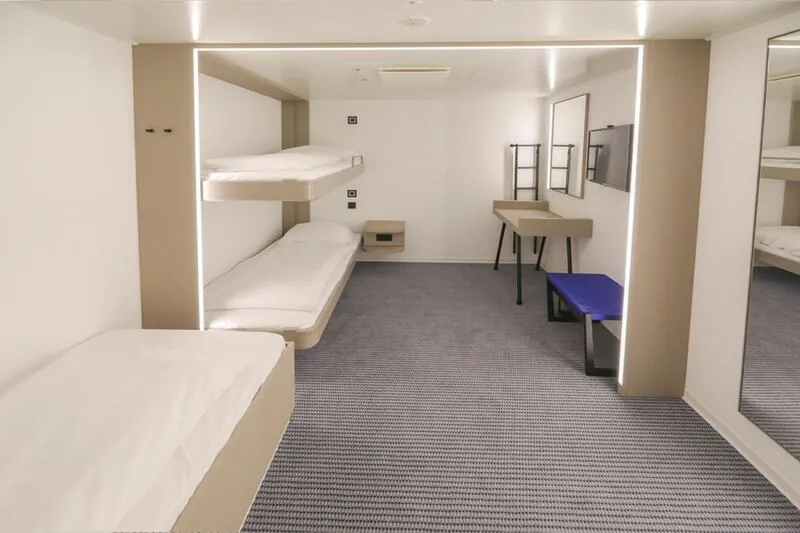
The cabin types compared
Operators use different names, but the same six options sit behind them right across Europe. Here is what each one actually gets you.
| Category | What you get | When it fits |
|---|---|---|
| Seat or deck | A place in a lounge or on deck, not always numbered. Your luggage stays with you. | Daytime crossings of up to about four hours. |
| Reclining lounge | An adjustable chair in a darkened room, often with a blanket. No private bathroom. | Overnight crossings when you can sleep in on arrival. |
| Inside cabin | A lockable room without a window, two to four berths, own shower and toilet. | The standard choice overnight — dark and quiet. |
| Outside cabin | The same, plus a window or porthole facing the sea. | Daytime crossings over ten hours and when children travel with you. |
| Balcony cabin or suite | A larger room with its own outdoor space, sometimes a seating area. | Crossings beyond twenty hours, when the ship is part of the trip. |
| Pet cabin | An inside or outside cabin where dogs and cats may sleep with you. Numbers per ship are strictly limited. | Whenever an animal travels — book this one first. |
The order when booking is almost always the same: first check whether any cabins are left at all, then pick the category. Supplements differ so much between operators, routes and seasons that a general figure would be worthless here — compare the cabin price with what a room ashore would cost you that same night.
What people underestimate
A cabin is not just a bed. It is a lockable room for luggage and a private bathroom. Travelling with children, you are mainly buying somewhere to retreat to. And if you drive on after docking, you are buying the ability to drive safely — which is the real argument on any overnight sailing.
How to decide
- Check the departure time: overnight or daytime?
- Overnight means a cabin — and book it early, they go first.
- Treat the inside cabin as the default; pay for a window only on long day sailings.
- With children, size up one category rather than booking two separate cabins.
- Driving on after arrival? Then the cabin is not comfort, it is safety.
Frequently asked questions
Can I do an overnight crossing without a cabin?
On most overnight routes yes, seats or reclining lounges exist. It is rarely pleasant, and we would advise against it before a long drive.
Do cabins get cheaper close to departure?
No. Cabins are scarce and usually sell out first; last minute the price tends to rise or there is nothing left.
Is an outside cabin worth it?
Rarely overnight, often on long daytime crossings. You are paying for the window, not for more space.
Is one cabin enough for four people?
Many operators offer four-berth cabins. Check the number of berths rather than the number of passengers in the fare — they are not the same thing.
Departures, cabins and fares from several operators in one view.
See routes